How Much South Africans Really Pay in Bank Fees Each Year (What You Can Do About It)
A practical look at the true cost of banking in South Africa and ways to lower fees
Are you quietly losing hundreds of rand a year to monthly account fees, ATM surcharges and instant-payment charges? You’re not alone. Many South Africans only discover how much they’re paying for banking when they add up months of small debits and penalties.
In this article I’ll walk you through realistic annual fee ranges, show how those costs add up across the country, and give practical steps you can take to reduce what you pay.
The invisible tax: how bank fees add up for the average customer
Start with the basics: a typical transactional account can charge a monthly service fee, per-transaction fees for withdrawals and transfers, ATM charges at out-of-network machines, SMS or paper-statement fees and penalties for things like failed debit orders. Individually these look small; together they become significant.
Example: if your account charges a R120 monthly fee, R30 in ATM and out-of-bundle transaction fees, and R20 in ad-hoc penalties each month, you’re paying R1,860 a year. That’s money many households would rather spend on groceries, schooling or saving.
Where do we get reliable detail on pricing behavior? Industry reporting and consumer watchdog coverage repeatedly highlight opaque pricing and large disparities across banks and account types. For an accessible breakdown of current bank pricing trends and practical cost-saving tactics, see the banking-fees primer from Rateweb which compares published 2025 pricing examples across retail banks.
Rateweb’s banking-fees guide is a useful starting point for scanning published fee schedules and recognizing common charge patterns.
How much do South Africans pay in total? National estimates and what they mean
There’s no single headline number published annually that neatly sums every rand South Africans pay in banking fees. Instead, researchers, journalists and regulators use a mix of bank financials, sector studies and consumer surveys to estimate totals and trends. Results vary depending on whether you count only explicit transaction fees or include interest income lost through high account costs and penalty charges.
Opinion pieces and reporting often point to the banking sector’s heavy dependence on non-interest income (fees and commissions) for profits. Historical investigations by the Competition Commission and reporting by outlets like the Mail & Guardian have shown this reliance can account for a very large share of banks’ revenue, implying consumers collectively pay billions in fees each year.
For recent commentary and regulatory attention to fee disparities, the Financial Sector Conduct Authority’s (FSCA) probe and related reporting offer a snapshot of why policymakers worry about transparency and fairness in fee structures. Read the coverage about the FSCA’s actions and parliamentary responses to understand the policy context.
Coverage of the FSCA’s investigation into bank fee inconsistencies explains why fee transparency is a live issue.
Key takeaway: While we can’t state one exact national total with perfect precision, studies and media analysis consistently point to billions of rand paid annually by consumers in explicit fees and related charges.
Typical fee buckets and annualized cost examples
Break your fees down into categories. Doing this helps you see where most cost leaks occur and which behaviors to change.
Monthly account or bundle fees — common for packaged accounts; can range from R0 (basic digital accounts) to R400+ (premium bundles).
Per-transaction fees — EFTs, card swipes, PayShap/Immediate Payment fees; these add up when you make frequent transfers.
ATM and Saswitch surcharges — higher when you use other banks’ ATMs or certain retailer tills.
Penalty/failed-debit charges — returned items, overdraft penalties and other incidentals are unpredictable but costly.
Communication and statement fees — SMS notifications, printed statements and branch service fees for things many people assume are free.
Putting numbers to those buckets helps. Here are three realistic annual profiles based on published pricing and typical usage patterns:
Low-cost digital user: R0–R50 monthly fee, mostly digital transfers, few cash withdrawals — annual cost roughly R0–R600.
Average urban salary-earner: R80–R200 monthly fee, monthly ATM withdrawal at other banks, several EFTs — annual cost roughly R1,000–R3,000.
High-fee bundle / inactive user: R250+ monthly bundle fee with under-used benefits, occasional penalties — annual cost R3,000–R8,000+.
These profiles are illustrative. Your actual cost depends on the exact product and how you transact. For current granular examples across major banks, consult the comparative pricing breakdowns in consumer-focused reporting like the recent Rateweb piece.
Who pays the most? Income, usage patterns and inequality
Bank fees are regressive in effect when lower-income customers pay a higher share of their income in fees compared with wealthier clients. Many lower-income account holders use cash withdrawals frequently, lack bundled accounts that reward balances, and may incur penalties more often.
Financial-inclusion surveys such as FinScope show broad access to accounts but also highlight low balances and infrequent use of some formal accounts. That combination increases the relative burden of fixed monthly fees for poorer households.
FinScope and payments research point to widespread banking access but also usage patterns that can make fees costly for low-balance customers.
Real stories: small examples that expose the problem
Consider Thandi, who gets a R6,000 monthly salary. She keeps R1,500 in her account and withdraws cash twice a month using an ATM from another bank. Her bank charges a R120 monthly account fee, R25 per out-of-network ATM withdrawal and R10 per instant payment above certain limits. Over a year her fees look like:
Monthly fee: R1,440
ATM surcharges (24 withdrawals at R25): R600
Occasional instant payments and small penalties: R240
Total: R2,280 — nearly 4% of her annual salary. That’s money that could pay for school books or groceries.
Now imagine millions of similar customers across the country. These individual burdens scale into the multi-billion-rand industry revenue highlighted in sector reporting.
Practical steps to reduce what you pay (do this today)
You don’t need to wait for regulators to fix pricing. Here are specific, actionable ways to cut fees now.
Map your behaviour: open your app or statements and list typical monthly transactions (EFTs, instant payments, ATM withdrawals, debit orders). Knowing your pattern points you to the best product.
Choose the right account type: digital-only accounts often have the lowest fees for frequent online users. If you rarely use branches, a low-fee digital account can save big.
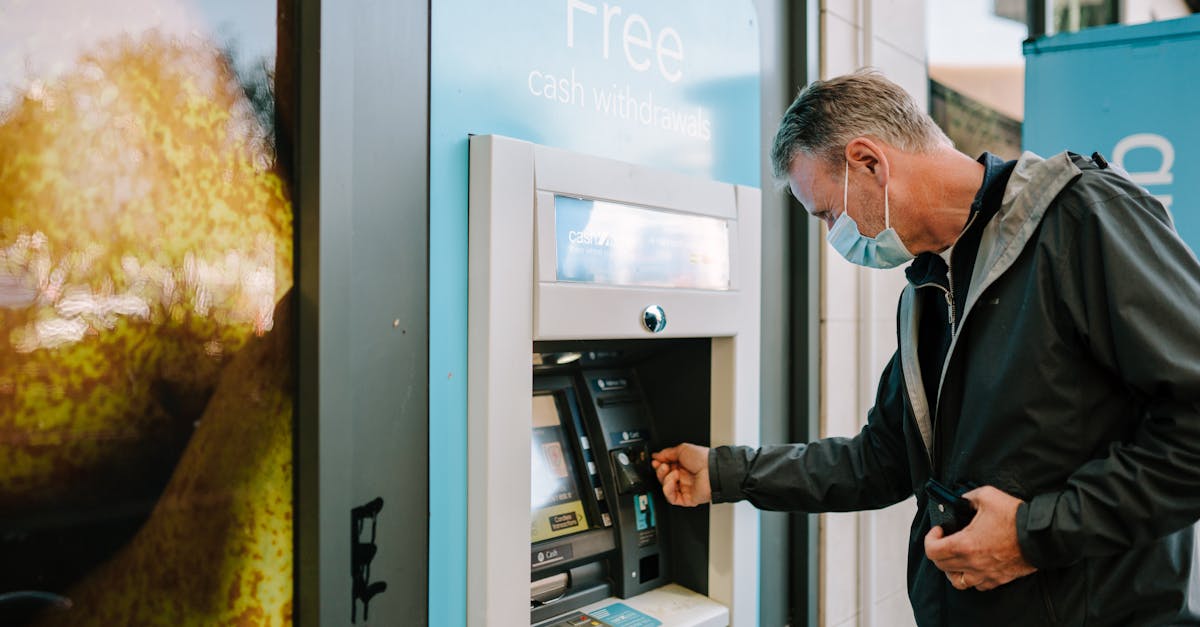
Use your bank’s ATMs and Cash@Till: avoid third-party ATM surcharges by withdrawing at your own bank or using retailer cash-out options where cheaper.
Replace Immediate Payment with standard EFT when speed is not required: immediate rails cost more.
Negotiate or switch: banks will sometimes waive fees or offer a more suitable product if you ask, especially if you’re an active customer.
For a practical roundup of these tactics and recent bank pricing behavior, see the consumer guide on Rateweb. It’s a good checklist you can apply to your account right away.
Questions to ask your bank (so you can bargain from a position of knowledge)
Which transactions are free and which are charged on my current plan?
What monthly fee would I pay if I move to your digital-only or pay-as-you-transact plan?
Do you refund or waive ATM surcharges for my profile (student, low-income, pensioner)?
How can I avoid or dispute incorrect debit orders or penalties?
Asking these specific questions often triggers concrete offers from customer service that lower your annual bill.
Policy and industry action: what regulators and the public are doing
Regulators have started scrutinizing fee structures and market conduct. The FSCA’s actions and parliamentary questions show growing political will to examine whether prices are transparent and fair. This regulatory attention could lead to clearer disclosure rules or caps that benefit consumers over time.
Media investigations and civil-society pressure also help. When consumers and journalists highlight opaque or unfair charging practices, banks sometimes respond with pricing changes or better disclosures.
To follow developments on the regulatory response and investigations into fee disparities, see reporting on the FSCA probe and public commentary from national outlets.
FAQ: Quick answers to the questions readers ask most
Q: Is there one bank that’s always cheapest?
A: No. Pricing depends on your transaction profile. A digital-first user may save most with a challenger bank, while a heavy cash user may prefer a bank with many ATMs and a bundled account. Compare plans against your usage.
Q: Should I switch banks just to save on fees?
A: If you can switch to an account that better matches your behavior and save several hundred rand a year with minimal hassle, yes. Do the math: compare switching friction with projected annual savings.
Q: Will regulators stop banks charging so much?
A: Regulators are investigating and improving disclosure, but systemic change takes time. Meanwhile you can act now to reduce what you pay.
Summary and a clear plan you can follow this week
Here’s a simple 7-day plan that usually lowers fees quickly:
Day 1: Pull your last 3 months of statements and list recurring charges.
Day 2: Count monthly ATM withdrawals and instant payments.
Day 3: Use online fee-comparison tools or the bank’s pricing brochure to identify a better product.
Day 4: Contact customer service and ask the four specific questions listed earlier.
Day 5: If no reasonable offer, open a low-fee digital account and test it for a month.
Day 6: Move debit orders and salary where appropriate, keeping one account active until everything clears.
Day 7: Recheck for penalties and update your plan every 12 months.
Final thought: while South Africans collectively pay billions in banking fees, the most powerful tool you have is personal action: understand your usage, pick the product that matches it, and challenge your bank when fees don’t make sense. Small monthly changes compound into real annual savings.
For practical comparisons and up-to-date pricing examples to help you pick the right account, start with Rateweb’s breakdown of current bank fees, and follow the FSCA’s reporting on fee investigations to see broader change in the pipeline.
Rateweb banking-fees guide — practical price examples and saving tactics.
Coverage of the FSCA’s investigation — explains regulatory scrutiny into fee disparities.
Historical analysis by Mail & Guardian — background on how important fees are to banks’ revenue mix.
Payments modernisation research — context on payment rails, frequency and why transaction choices affect costs.