
How Computer Vision Powers Real-World Applications
Practical examples of image intelligence transforming industries from retail to healthcare
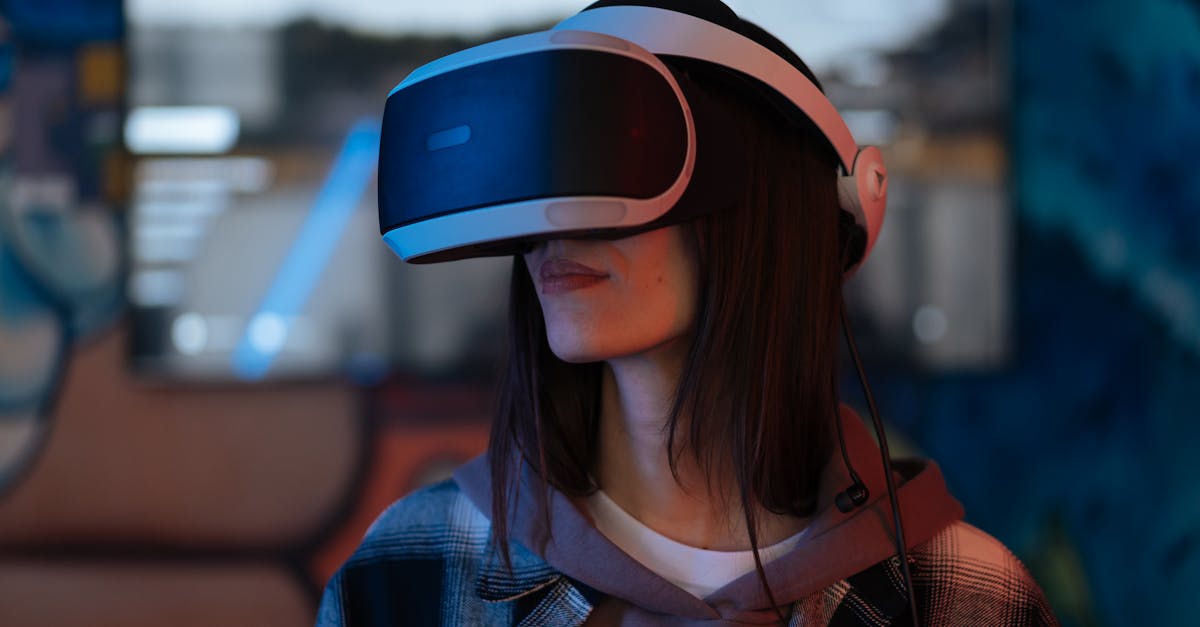
Imagine a world where cameras do more than record moments: they interpret scenes, flag risks, and automate decisions. That world is not far off. Computer vision turns pixels into actionable insight across industries, helping organizations detect defects, guide robots, and deliver faster medical diagnoses.
If you want to understand how this technology shows up in everyday life and what makes it work, this article walks through real implementations, concrete examples, and steps to begin experimenting with image intelligence.
What computer vision actually does and why it matters
At its core, computer vision is the set of algorithms that enable machines to interpret visual input from cameras, sensors, or stored images. It combines image processing, pattern recognition, and machine learning to identify objects, actions, and context.
Key capabilities include classification, object detection, semantic segmentation, and tracking. Each capability answers a different question: what is in the image, where are they, which pixels belong to which object, and how do objects move over time?
These capabilities drive value by automating inspection, enabling new user experiences, and scaling visual tasks that were previously manual and slow. Below are concrete examples showing how those building blocks are used in practice.
Transportation: safer travel and autonomous systems
Transportation has become a visible showcase for computer vision. Cameras mounted on vehicles and infrastructure watch lanes, read signs, and detect pedestrians. Vision systems support driver assistance and the complex perception stacks of autonomous vehicles.
Advanced Driver Assistance Systems (ADAS): lane departure warning, pedestrian detection, and automatic emergency braking use object detection and tracking in real time.
Autonomous vehicle perception: multi-camera and lidar fusion relies on segmentation and object classification to create a reliable scene understanding.
Traffic management: city cameras analyze congestion, detect accidents, and optimize signal timing based on vehicle counts.
Companies integrate vision with mapping, GPS, and sensor fusion to make split-second decisions. Safety-critical systems often include redundancies such as radar and lidar to complement camera-based perception.
Healthcare: image-based diagnosis and workflow automation
Medical imaging is another major adopter. Algorithms trained on large datasets can detect anomalies in X-rays, CT scans, and pathology slides with high sensitivity.
Radiology assistive tools highlight suspicious areas for radiologists, improving detection rates and throughput.
Pathology automation uses cell segmentation and feature extraction to speed slide review.
Telemedicine and triage enable remote screening with smartphone photos and camera feeds.
Studies show that combining human expertise with computer vision increases diagnostic accuracy in several imaging tasks, shortening time to treatment and reducing missed findings.
Regulatory validation and careful clinical trials are required before deployment. Many successful products start as decision-support tools rather than fully autonomous diagnostic systems.
Retail and logistics: improving the shopping and supply chain experience
Retail and logistics apply vision to streamline operations and reduce friction. From shelf monitoring to automated checkout, visual systems deliver direct business benefits.
Automated checkout: camera arrays track items a shopper picks up and charge them automatically without barcode scanning.
Inventory management: cameras scan shelf stocks to trigger restocking and track product placement.
Warehouse robotics: bin picking and quality checks rely on object detection and 3D pose estimation.
Real-world deployments combine cameras with barcodes, RFID, and worker workflows. That hybrid approach reduces errors while improving throughput and customer experience.
Manufacturing and quality control: catching defects at scale
Manufacturers use vision systems to inspect parts, classify defects, and automate sorting. High-speed cameras integrated into production lines flag anomalies faster than human inspectors.
High-resolution cameras capture each part as it passes on a conveyor.
Segmentation and anomaly detection algorithms compare each image to expected patterns.
Robotic sorters remove defective items based on detected fault types.
Key benefits include reduced scrap rates, faster cycle times, and consistent quality. Modern systems increasingly use unsupervised anomaly detection to spot novel defects without exhaustive labeled datasets.
Security, biometrics, and public safety
Computer vision powers facial recognition, behaviour analysis, and perimeter security. Cameras analyze live feeds to detect unauthorized access, suspicious actions, or specific events.
Access control: facial recognition can replace keycards in controlled environments.
Surveillance analytics: people counting, loitering detection, and crowd flow analysis improve public safety planning.
Forensics: automated redaction and video summarization accelerate investigations.
Privacy and bias concerns are central here. Responsible deployments include clear policies, audit logs, and accuracy tests across diverse populations to reduce discriminatory outcomes.
Agriculture and environmental monitoring
Farmers and conservationists use drones and field cameras to monitor crops, detect disease, and estimate yields. Vision systems detect stress patterns and insect damage earlier than visual walk-throughs.
Crop health monitoring identifies water stress and nutrient deficiencies via multispectral imaging.
Pest and disease detection flags affected plants for targeted treatment.
Wildlife tracking uses camera traps and automated species classification to support conservation efforts.
These applications reduce input costs and support sustainable practices by enabling targeted interventions rather than blanket treatments.
Mobile apps and augmented reality experiences
Most people interact with computer vision daily through smartphones: portrait mode, scene detection, AR filters, and shopping features that identify objects in photos. These features blend classical image processing with deep learning models optimized for mobile hardware.
Developers often deploy lightweight neural networks or use on-device accelerators for latency-sensitive tasks. Cloud-based inference remains common for heavier models, especially for batch processing and analytics.
How organizations build and deploy vision systems
Turning a vision concept into production involves several practical steps. Each step presents trade-offs between accuracy, latency, and cost.
Data collection: gather diverse images with representative conditions and label them for the target task.
Model selection: choose architectures for classification, detection, or segmentation based on the problem.
Optimization: reduce model size and latency for the deployment target (edge, mobile, cloud).
Integration: combine vision outputs with downstream systems like robots, dashboards, or alerts.
Common tools include open-source libraries such as OpenCV for image processing and research frameworks like PyTorch or TensorFlow for deep learning. For practical starting commands, many developers run pip install opencv-python to get the core CV stack on their machine quickly.
from cv2 import imread, CascadeClassifier, cvtColor, COLOR_BGR2GRAY
img = imread('sample.jpg')
gray = cvtColor(img, COLOR_BGR2GRAY)
face_cascade = CascadeClassifier('haarcascade_frontalface_default.xml')
faces = face_cascade.detectMultiScale(gray, 1.1, 4)
print('Detected faces:', len(faces))
That simple snippet demonstrates classic detection workflows; production systems often replace Haar cascades with deep learning models for better accuracy and robustness.
Ethics, privacy, and regulation to consider
Deploying vision systems requires attention to legal and ethical constraints. Privacy laws, regulated industries, and public sentiment shape acceptable uses.
Data minimization: collect only what is necessary and store it securely.
Transparency: document model purposes, limitations, and decision thresholds.
Bias testing: evaluate model performance across demographic groups and environmental conditions.
Implementations that prioritize privacy and fairness are more likely to gain user trust and avoid regulatory setbacks.
Consult legal and compliance teams early for projects involving surveillance or biometric identification.
Common questions people search for
Readers often want concise answers to practical questions. This section addresses frequent search intents with short, actionable responses.
How accurate is computer vision? Accuracy varies by task and data quality. State-of-the-art models achieve human-level performance on some benchmarks but still struggle with rare conditions and distribution shifts.
Can small teams build vision products? Yes. With pre-trained models and transfer learning, small teams can prototype quickly. Robust production requires testing and monitoring.
Is on-device inference necessary? For latency and privacy, on-device inference is preferred. Cloud inference remains viable when models are large or centralized analytics are needed.
Where to find reliable learning resources and research
If you want to dig deeper, start with curated course materials and reputable research pages. For foundational concepts and practical exercises, the Stanford CS231n course notes provide a systematic introduction to convolutional networks and vision tasks.
For ongoing breakthroughs and peer-reviewed findings, professional venues such as IEEE Spectrum and top conference proceedings are useful to monitor. Combining practical tutorials with primary research helps bridge theory and production best practices.
Future trends that will shape adoption
Several trends will broaden the impact of computer vision in the coming years.
Model efficiency: smaller, faster architectures will enable more on-device capabilities.
Multimodal perception: combining vision with audio and text will create richer context understanding.
Self-supervised learning: reducing the need for labeled data will accelerate new deployments.
Regulatory frameworks will mature, making compliance part of product roadmaps.
These shifts mean more industries will adopt vision in safe, auditable ways that integrate with existing workflows.
Key takeaways and next steps
Computer vision is a versatile technology that automates visual tasks across transportation, healthcare, retail, manufacturing, agriculture, and consumer devices. It combines classical image processing with modern deep learning to classify, detect, segment, and track visual elements.
To start applying vision in a project, follow these practical steps:
Define the concrete problem and measurable success metrics.
Collect representative data and plan for labeled examples.
Prototype with open-source tools and pre-trained models.
Test for edge cases, bias, and performance under real conditions.
With careful planning and responsible practices, vision systems can deliver measurable ROI while respecting privacy and fairness constraints.
Now that you understand how computer vision is applied across industries and the practical steps to deploy it, you can begin exploring specific opportunities in your domain.
Start implementing these strategies today by identifying one visual task to automate, gathering sample data, and running a quick prototype using tools like OpenCV and lightweight neural networks. Take the first step this week by collecting a small dataset and testing a basic model to measure improvement in your process.