
How AI Is Changing the Way People Work and Learn
Concrete shifts in tasks, skills, and institutions that are reshaping jobs and classrooms
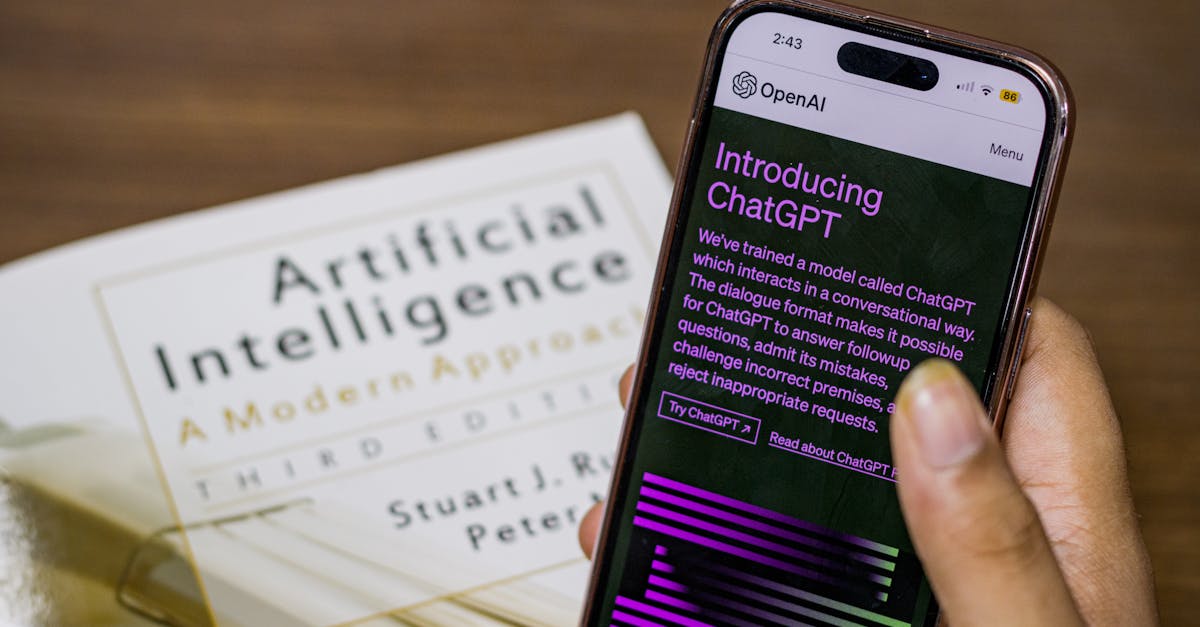
ChatGPT drew 100 million monthly users within two months of its public launch, making it the fastest consumer app growth on record. That sudden, visible adoption is where most people first noticed AI, but the deeper change is quieter: software that once handled narrow tasks now sits beside people as an active collaborator, altering what work looks like hour by hour and what learning looks like day by day.
By the end of this piece you will see how those changes happen in three domains: the day-to-day mechanics of tasks, the emerging economies of skills and training, and the institutional shifts employers and schools are making to respond. You will also get a short, practical sense of what choices matter next for workers, managers, and educators.
From repetitive chores to mixed human-AI teams
Work used to be a neat division between routine and creative: routine tasks were mechanized, and judgment remained human. That boundary is blurring. Large language models, code assistants, and vision systems are not replacing entire occupations instantly; they are reassigning the atoms of work. A paralegal still prepares briefs, but research that used to take hours can be condensed into a 20-minute synthesis that needs human verification. A junior developer using GitHub Copilot can generate boilerplate in seconds and spend more time designing architecture. GitHub reported Copilot surpassed 1 million users within a year of its launch, suggesting this is not an isolated experiment but a mainstream productivity pattern.
The economics of that shift matter. PwC estimated AI could contribute as much as $15.7 trillion to global GDP by 2030, a number driven as much by faster output per worker as by new products. In practical terms, firms adopting AI see two levers: they can produce more with the same headcount, or they can redeploy labor toward higher-value activities. The tradeoff plays out differently by sector. In manufacturing, automation remains the dominant force. In knowledge work, augmentation is more common: models retrieve, summarize, and propose, and humans validate, contextualize, and decide.
That pattern changes how organizations measure jobs. Instead of listing tasks tied to a job title, forward-looking managers map discrete tasks and ask which are automatable, which require human judgment, and which become richer when paired with an AI assistant. That task-level view is why job titles persist while job content shifts rapidly.
Learning that adapts to the learner
Education is taking a page from well-tuned software: personalization at scale. Adaptive systems have existed for decades, but the new generation of generative models enables more natural, interactive tutoring. Khan Academy's experimental tutor, Khanmigo, acts like a patient coach that can ask Socratic questions and generate practice problems tailored to a student's current misunderstandings. For classroom teachers, that means AI can take over routine feedback on grammar, produce formative assessments, or offer alternate explanations so that a human instructor can focus on higher-order guidance.
Employers are noticing the same leverage for workforce training. Online platforms now offer modular learning pathways that combine short projects, peer review, and AI feedback. Coursera and others reported surging enrollments in AI-related courses in 2023, and companies are building internal learning programs that blend microcredentials with on-the-job AI practice. That matters because reskilling is not a one-time event; it is continuous. If a salesperson learns to use a forecasting assistant this year, they will need new skills next year to interpret model outputs and translate them into client strategy.
Not all of this is positive without guardrails. AI tutors can accelerate learning for motivated students, but they can also replicate biases or provide misconceptions when models hallucinate. The technical fix—better models and better evaluations—is necessary but not sufficient. The human element remains crucial: teachers, mentors, and instructional designers must set learning goals, check model output, and design assessments that measure genuine understanding rather than the ability to prompt a model.
Uneven gains and the geography of opportunity
The benefits of AI will not be distributed evenly. Firms with deep data, large talent pools, and capital to integrate AI will realize productivity improvements faster than smaller competitors. That accelerates concentration in some industries and geographies. Remote work laws and hiring flexibility reduce some geographic barriers, but the highest-paying AI-adjacent roles still cluster around major tech hubs and elite institutions that produce skilled entrants. The result is a widening gap between workers who can work with models and those whose tasks are thinly substitutable.
Policy choices matter here. Countries and regions that invest in broadband, continuing education, and systems for credential recognition will capture more of AI's upside. Employers that create systematic onramps—structured apprenticeship programs, rotational roles that pair novices with AI-augmented mentors, and clear career ladders—will retain and reskill talent more effectively than those that treat AI as a cost-cutting lever.
"AI will change the nature of about one-third of essential job skills in a handful of years," industry analyses suggest, shifting emphasis toward creativity, judgment, and interpersonal skills.
That shift in skill emphasis is not a fuzzy prediction. Hiring data already shows rising demand for prompt-engineering skills, data-literacy, and domain expertise married to model-savvy. Employers value people who can interpret model outputs within business context, identify failure modes, and translate AI suggestions into actionable plans. Those are discrete, teachable abilities, but they require deliberate practice and employers willing to let employees learn on the job.
What to do next: practical choices for people and institutions
For workers, the most resilient posture is to treat AI as a tool to expand what you can do, not just as competition. That starts with concrete experiment: pick a repetitive part of your work and try automating it with available tools, then evaluate what time you free up and whether that time is used for higher-value work. Ask whether your role requires skills the model cannot replicate—ethical judgment, complex negotiation, trust-based relationships—and double down there. Learning pathways that combine project-based work with model use are more valuable than passive courses.
Managers should move from ad hoc pilots to operational integration. A useful checklist: map tasks rather than titles; measure outcomes rather than activity; define guardrails for accuracy, data privacy, and bias; and create explicit time for staff to learn and adapt. Companies that reward experimentation and tolerate early imperfections will find productive patterns faster than those that demand perfect rollouts. That tolerance has to be bounded by standards: in regulated domains like healthcare or finance, models must meet documented validation before affecting decisions.
Educators and training providers must redesign assessment. If models can draft essays or simulate code, then tests that measure rote production lose meaning. Alternative assessments—project-based portfolios, oral defense of work, peer critiques—measure whether students can apply concepts and evaluate model outputs. Institutions should also teach what models do, their limits, and how to verify results. Critical reading now includes critically reading a model's answer.
Policymakers need a different set of instruments: incentives for lifelong learning, support for displaced workers, standards for transparency, and funding for public-good models that serve small businesses and schools. Regulation that only focuses on restricting models without addressing reskilling risks leaving the labor market brittle. Thoughtful policy aligns safety standards with investments in human capital so communities can access the benefits rather than only bear the costs.
The key point is not that AI will make people obsolete, but that it will reorganize work around new combinations of human and machine capability. Tasks that reward pattern recognition and rapid retrieval will increasingly be handed to models; tasks that require empathy, ethics, persuasion, and complex judgment will become more valuable.
That reorganization will be noisy. Some roles will shrink, others will expand, and many will morph. The outcome depends on decisions—by employers, educators, and policymakers—about which skills to prioritize, how to measure value, and how to share gains. Those are choices we still control.
If your concern is practical, start small: identify the repetitive hour in your week, ask whether an assistant could do it, and design a quick experiment. If you are responsible for an organization, invest in task mapping, measurement, and structured learning time. The technology moves quickly. The institutions that adapt with learning and ethics in mind will shape whether AI widens opportunity or narrows it.
Read More
Read more articles on the topics that interest you
What Is Retrieval-Augmented Generation (RAG), and Why Does It Matter?
How RAG connects AI models to external information

The Jobs Most Likely to Make You Rich in South Africa
Which careers pay far above the average and the realistic paths to reach them

How to Enter a High-Demand Career Without a University Degree
Concrete routes, from bootcamps to apprenticeships that lead to paid roles in tech and trades

10 Skills That Can Land You a Job Within 12 Months
Which skills employers actually hire for, how to learn them fast, and how to prove you can perform

South Africa's Hottest Careers for 2026
Where demand, pay, and training align for the next hiring cycle across key sectors

The Jobs Companies Can't Fill Fast Enough in South Africa
Why employers struggle to hire developers, nurses, artisans and drivers despite high unemployment