
Debt Isn't Just a Number — It's a Structural Tax on Your Future
A practical, number-driven sequence to reduce interest costs and reclaim future income
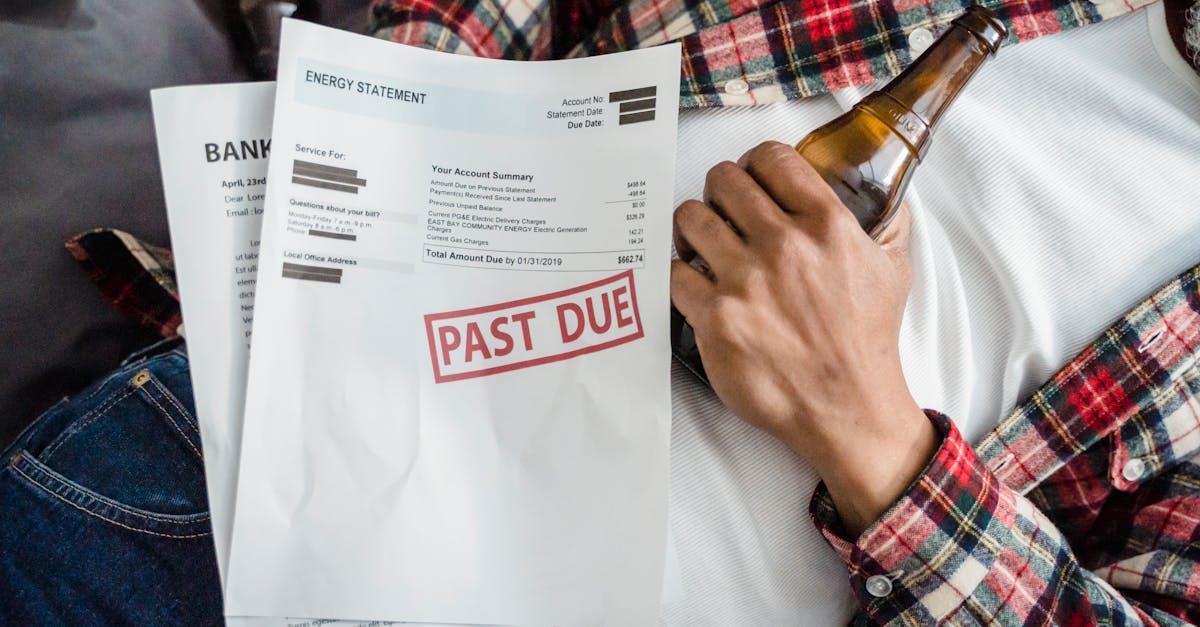
Carrying a $10,000 credit card balance at 20 percent interest costs roughly $2,000 the first year alone. That is not an abstract burden; it is an automatic transfer from next year’s paychecks to someone else’s balance sheet. Over a decade, with minimum payments, that same balance can balloon into more than $20,000 paid in total. Debt does not merely shrink your cash flow. It compounds a tax on your future choices.
By the end of this piece you will understand why some debts must be attacked immediately, why others can be managed differently, and what a realistic 12–24 month elimination sequence looks like for households with ordinary incomes. There are real numbers here—payment examples, refinancing thresholds, and specific behavioral rules that change outcomes without needing a windfall.
Why debt functions like a tax
Taxes take money from earnings. High-interest debt does the same, and then it charges interest on top of that extraction. A credit card with a 20 percent APR guarantees you a 20 percent negative return on any dollars left sitting as a balance. Compare that to the stock market: long-term equity returns average around 7–10 percent, but those returns are neither guaranteed nor liquid in the short term. Paying 20 percent to an issuer is a guaranteed loss. That asymmetry matters.
Mortgage interest complicates the picture, because some of it is deductible and a mortgage is secured by an asset that often appreciates. But deduction is not a subsidy big enough to make an expensive mortgage painless. If your mortgage rate is 6 percent and you can safely refinance to 4 percent, refinancing makes sense; if your mortgage is at 3 percent, aggressive prepayment earns a small guaranteed return only if you value the psychological payoff more than possible higher returns from investing.
U.S. household debt topped roughly $17.5 trillion in recent national data, with credit card balances exceeding $1 trillion—an amount that functions like a recurring tax on future income.
The elimination sequence that actually works
The right sequence blends math with psychology. Purely mathematical theory favors the avalanche method: pay down the highest-interest accounts first. Pure psychology favors the snowball: pay the smallest balances first to build motivation. The sequence that actually works combines both.
First, stop adding debt. This is operational: close or pause cards you use to overspend, move recurring charges to a debit account, and set a hard monthly credit-card budget. Taking on new unsecured debt erases the modest progress you make servicing old balances.
Second, build a small, liquid buffer. Keep $500–1,000 in an accessible account if you are low on savings. That prevents emergencies from reloading high-rate debt. It is not the full emergency fund; it is a shock absorber.
Third, attack high-interest unsecured debt—credit cards, payday loans, and private-label retail cards. Prioritize balances charging 15 percent APR or more. If you have two cards at 22 percent and one at 13 percent, target the 22 percent accounts until they fall below 10 percent effectively. The math is stark: paying $300 extra per month on a $5,000 balance at 20 percent cuts years from the payoff schedule and saves thousands in interest compared with paying that same $300 against a 6 percent loan.
Fourth, evaluate consolidation tactically. If you can move a 20 percent balance to a 0 percent promotional transfer for 12–18 months, do it—provided the transfer fee and the plan to pay within the promo period make sense. If you can replace 18–22 percent credit card debt with a 9–12 percent personal loan, the interest savings compound immediately and your amortization schedule becomes predictable.
Fifth, treat student loans differently. Federal student loans offer income-driven repayment and borrower protections, including public service forgiveness for qualifying careers. If your federal loans carry a low fixed rate—say 4–6 percent—and you might qualify for forgiveness or need the cash-flow relief of income-driven plans, aggressive paydown can be inefficient. Private student loans with higher rates deserve the same treatment as other unsecured debt: refinance if you can get a materially lower rate, or prioritize payoff if rates are high and no relief program applies.
Numbers that make the trade-offs obvious
Concrete example: imagine two debts, each $7,500. One is a credit card at 20 percent; one is a personal loan at 8 percent. You have an extra $400 per month to apply to debt. Applying the $400 to the 20 percent card saves about $2,200 in interest and closes the account roughly 28 months sooner than if you applied it to the 8 percent loan first. The effective return on that extra payment is the avoided interest rate—20 percent. That is a better guaranteed return than most safe investments.
Refinancing decisions are similar: if you can reduce your rate by 3–5 percentage points, the savings are often worth the one-time costs. But the break-even depends on balance size. Cutting an 18 percent card to 9 percent on a $3,000 balance might save $300–500 a year—worthwhile; paying refinancing fees that equal a year or more of interest is not.
Behavioral choices matter as much as rates. Introducing a modest automatic transfer—say $100 weekly—into the highest-rate account creates predictable pressure. People underestimate how much mental energy is saved by a predictable schedule. Small wins reduce the temptation to borrow anew.
Tools, traps, and guardrails
Balance transfers, personal loans, and cash-out refinancing are powerful tools when used with discipline. Balance transfer cards with a 0 percent window can pause interest accumulation, but they are traps if you only pay the minimum while the promotional period ends. Personal loans are useful when they reduce the weighted average rate by at least 3 percentage points and impose a fixed amortization that forces principal repayment.
Beware debt-settlement firms promising 50 percent reductions; settlement damages credit and can carry tax consequences because forgiven debt may be reported as income. Similarly, payday loans and title loans are a structural trap: their short terms and astronomical APRs (sometimes in the triple digits) make them ruinous as a long-term solution.
Protecting credit is a practical consideration. Closing a credit card can raise your utilization ratio and temporarily ding your score. If the account has no annual fee and you are disciplined, leaving it open with zero balance preserves available credit and reduces utilization. If you must close a card, pay down other revolving balances first to avoid utilization spikes.
A realistic 12–24 month plan
Here is a simple, repeatable template for someone with $25,000 in mixed debt and a household income of $65,000. Month 1–3: freeze new credit, build a $1,000 buffer, and list every account with balance, rate, and minimum payment. Months 4–6: use the hybrid sequence—attack any debt above 15 percent while making minimums elsewhere and automate an extra $300 monthly to the highest-rate account. Months 7–12: reassess for consolidation opportunities; consider a personal loan if it lowers the average rate by at least 4 percentage points and shortens term to under 5 years. Months 13–24: escalate extra payments as small lifestyle wins free up cash—sell an unused subscription, reallocate bonuses, or temporarily pause discretionary savings toward a vacation and push that money to debt instead.
Using this template, a household that applies an extra $400 per month to its highest-rate debts can cut a plausible $25,000 mixed balance to under $10,000 in two years, depending on rates and minimums. Those are approximate numbers, but they demonstrate how structured cash flow, not austerity, accelerates payoff.
Final thought: Treat debt reduction like a long-term investment in optionality. Each dollar you remove from high-interest obligations frees future earnings for housing, retirement, mobility, or risk-taking in your career. It is not moralizing; it is arithmetic. Pay attention to effective interest rates, protect a small emergency buffer, and adopt a sequence that marries high-rate math with psychological momentum. That combination is what actually reduces the structural tax debt imposes on your future.
Read More
Read more articles on the topics that interest you

The Jobs Most Likely to Make You Rich in South Africa
Which careers pay far above the average and the realistic paths to reach them

Top Money Market Accounts in South Africa
Where to park cash for liquidity, better returns than a cheque account, and low risk

Where South Africans Should Buy US Stocks
Compare platforms, fees, forex costs, tax treatment and practical steps for investors

Careers Earning R500,000+ Per Year in South Africa
Which roles routinely clear half a million rand, how long it takes, and what drives those paychecks

Interactive Brokers vs EasyEquities: choosing where to buy global stocks
A practical comparison of fees, markets, FX, tools, and investor fit

Best Dividend Shares on the JSE Right Now
Where to find reliable income, realistic yields, and the tax rules that matter