


Turn ideas into working apps with plain English - no code, Stripe ready.
Get startedWhat Is Quantum Computing? Three Ideas in Plain English
See how qubits work, what quantum machines might solve and why they are not faster at everything
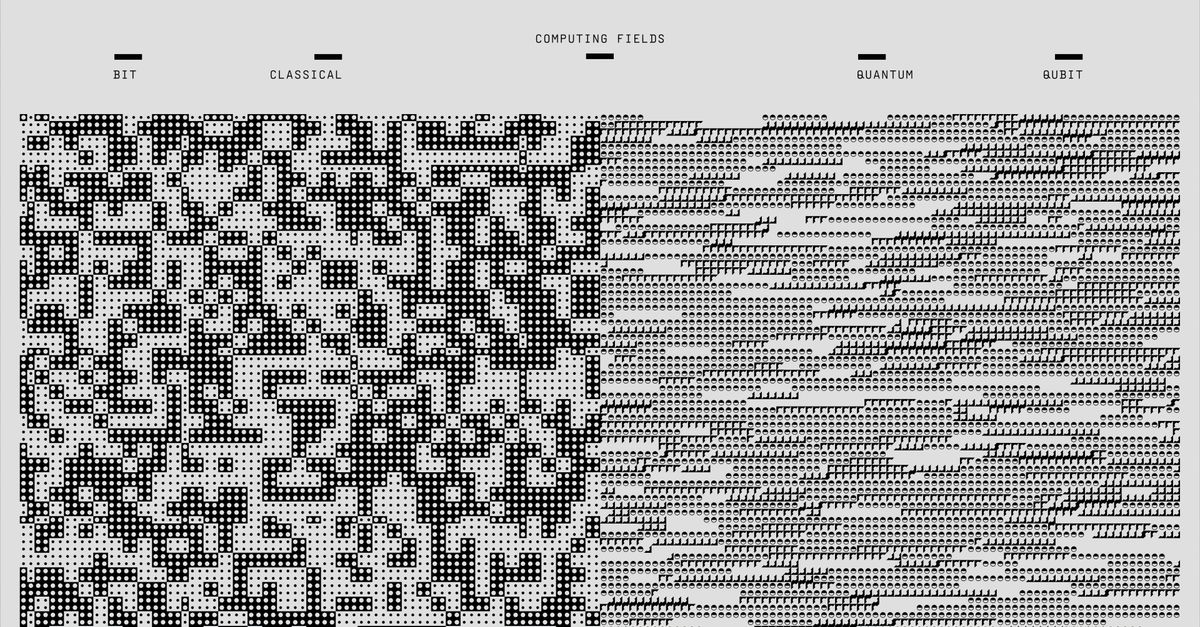
Quantum computing is a way of processing information using the rules of quantum physics. Ordinary computers use bits that are either 0 or 1; quantum computers use qubits, which can behave like a blend of both states before measurement. That difference could help with certain problems, such as modelling molecules, but it does not make every computer task faster.
The useful distinction is between a machine that handles familiar tasks, such as email and spreadsheets, and one designed for particular calculations that are hard for ordinary computers. Quantum devices are difficult to build and control, and errors remain a major obstacle. Three ideas explain the difference: superposition, entanglement and interference.
What Is Quantum Computing, and How Does It Work?
Quantum computing stores and processes information in qubits, then uses carefully controlled operations to shape the odds of possible measurement results. A classical computer follows rules built around bits; a quantum computer uses quantum states that can combine and interact before a result is read.
A bit has a value of 0 or 1. A qubit can be prepared in a state that gives a particular probability of measuring 0 and a particular probability of measuring 1. Once measured, it produces one result, not a readable list of every possibility it held before measurement.
That last point matters. A quantum computer does not simply try every answer at once and hand you the right one. A useful algorithm has to arrange the calculation so that wrong answers become less likely and useful answers become more likely when the qubits are measured.
Quantum computers also do not replace the ordinary computers that run phones, bank systems or office software. A classical computer is better suited to most everyday jobs. A quantum processor would work alongside classical hardware, with each doing the tasks it can handle well.
How Do Superposition, Entanglement and Interference Work?
Superposition, entanglement and interference describe three parts of how quantum information behaves. They are often introduced with analogies, but each has a precise meaning in physics.
Superposition means a qubit can be prepared in a state combining the possibilities 0 and 1. The combination has probabilities and phases, which affect what happens during later operations. It is not the same as a tiny switch being both fully on and fully off in an everyday sense.
For a rough analogy, picture a spinning coin. While it spins, calling it heads or tails is not yet a settled description of the result you will see when it lands. A qubit is not literally a spinning coin, and the analogy misses the mathematical details, but it helps explain why measurement changes what information you can report.
Entanglement is a connection between qubits that makes the state of the group impossible to describe as separate, independent states. Measuring one qubit can be related to the result for another, even when the qubits are apart. It does not let anyone send a message faster than light.
Interference is the way quantum possibilities can reinforce or cancel one another. Quantum algorithms use operations to set up that pattern. The aim is to raise the probability of useful outcomes and lower the probability of unhelpful ones, rather than to read every possible answer.
These effects are fragile. Interactions with the surrounding environment can disturb a qubit and introduce errors, a problem called decoherence. Engineers use shielding, precise control and error-correction methods to reduce or manage errors, but those methods add complexity and can require many physical qubits to support more reliable calculations.
What Problems Could a Quantum Computer Solve?
Quantum computers are most promising for some specialised calculations, not for every task that takes a long time on a laptop. Researchers are studying areas such as molecular simulation, certain optimisation problems and algorithms that could affect cryptography.
Modelling molecules is a natural area of interest because molecules themselves follow quantum rules. In principle, a quantum computer could help represent some molecular behaviour more directly than a classical machine. That might support research into materials or chemical processes, but it does not mean a useful commercial discovery follows automatically.
Optimisation means choosing a good arrangement from many possible ones, such as scheduling jobs or routing vehicles. Some quantum approaches target these problems, but a quantum method is not automatically better than a well-built classical algorithm. The advantage depends on the problem, the size of the calculation, the quality of the hardware and the comparison being made.
Cryptography deserves careful wording. A sufficiently capable, fault-tolerant quantum computer running Shor’s algorithm could threaten widely used public-key systems based on factoring and discrete logarithms. Today’s quantum devices are not the large, reliable machines needed for that task. Organisations still need to plan for cryptographic change because replacing systems takes time, not because an immediate break-in is expected.
Quantum computing is a poor fit for ordinary tasks such as loading a website, editing a document or sorting a small spreadsheet. For those, existing processors are cheaper, easier to programme and effective. A quantum machine earns its place only if it can produce a useful result that classical methods cannot produce as efficiently.
How Is Quantum Computing Different From Classical Computing?
Classical computers use bits, which store 0 or 1, and logic operations to process them. Quantum computers use qubits and quantum operations, then measure the result, so their strengths and limits differ rather than forming a simple faster-versus-slower contest.
For a small example, a classical computer can check possible routes between a few delivery points quickly. If the number of possible routes grows, the work may become harder, but classical techniques can still narrow the search or find useful approximate answers. A quantum algorithm might help with certain structured versions of the problem, but the benefit has to be demonstrated against the best classical method.
Quantum machines also have different practical demands. They need specialised hardware and careful control, while programmers must choose algorithms suited to quantum operations. A result from a quantum device may still need checking and further processing on a classical computer.
Quantum computing and artificial intelligence are separate fields, though they could intersect. AI usually means software methods that learn patterns or make predictions from data; quantum computing describes a type of hardware and computation. A quantum processor does not automatically make an AI system more accurate or less expensive.
Can You Use a Quantum Computer, and What Would It Cost?
You do not need to own a quantum computer to learn the basics. Some providers offer access to quantum hardware or simulators through cloud services, but the available machines, pricing and account terms change. Check the provider’s own page before committing money, and start with a simulator if you are learning algorithms rather than testing physical hardware.
There is no single purchase price that answers what quantum computing costs. Hardware is specialised, access arrangements vary, and a project also needs people who can frame the problem, write software and compare results with classical methods. For most South African organisations, the first cost is staff time and experimentation, not buying a machine.
Say a South African team sets aside a hypothetical R30,000 for a six-week learning project. If it spends R20,000 on staff time and R10,000 on cloud access and related testing, the total is R30,000. These are planning figures for illustration, not a quoted market price; the team should check current provider fees and account terms before setting a budget.
The hidden cost is often the comparison work. A team may spend weeks translating a business problem into a form a quantum algorithm can use, only to find that a standard classical solver is cheaper and just as effective. Budget for that possibility rather than treating a successful hardware run as proof of business value.
If you are a student or software developer, begin with linear algebra, probability and basic programming before paying for hardware access. A simulator lets you test small circuits without needing a physical quantum processor. If you work in a business, choose a project only when you can state the calculation, the classical baseline and what a better result would be worth.
What Does Quantum Computing Mean for South Africa?
For South Africans, quantum computing is currently more relevant as a technical field to study and monitor than as a tool most businesses can put into daily use. Universities and research groups may offer routes into physics, computer science or engineering, but course availability and research projects change, so check the institution’s current programme information directly.
People entering the field can build a foundation in programming, linear algebra and quantum mechanics. Software skills are useful, but a role in quantum hardware may also call for physics, electronics or engineering. The right mix depends on whether you want to write algorithms, develop control systems, study materials or assess business applications.
For a South African company, a sensible first step is to identify a costly calculation that current software handles poorly, then ask a specialist to compare classical and quantum approaches. Do not buy a quantum solution because the subject is receiving attention. Require a measurable test, a realistic timeline and a clear account of data, staff and access costs.
Quantum computing is a new way to process certain kinds of information, with possible benefits in specific fields and substantial technical limits. If you are learning, use a simulator and study the three ideas above; if you are planning a business project, first document the classical method and its cost so any claimed quantum advantage has something concrete to beat.
Read More
Read more articles on the topics that interest you

Online Banking Scams in South Africa: 8 Ways to Stay Safe
Spot fake bank messages, protect your login details and know what to do after a loss

Best Online Courses South African Employers Respect in 2026
Compare recognised tech, data and project credentials by cost, time and job fit

Is Solar Power Worth It in South Africa? The Numbers
Compare upfront costs, bill savings, battery trade-offs and payback before requesting quotes

Is a Postgraduate Degree Worth It in South Africa? Cost Test
Compare tuition, lost income and likely career gains before you enrol

How to Apply for NSFAS Funding for 2027 in 7 Steps
Check eligibility, prepare documents and track your application without missing a decision

What Is an AI Agent? 5 Small-Business Uses That Save Time
See what agents can do, what they cost and where human checks still matter