
Slavery of the Mind and the Fear of Change
Reflections on pessimism and why some minds reject possibility
I have noticed something strange whenever I share an idea that feels a little bigger than the usual. Before I can even finish explaining, someone says, “That will never work.”
It does not matter what the idea is. It could be a project, a thought about changing the way we live, or a belief that people can rise out of struggle if we change how we think. The answer is often the same. Impossible.
For a long time, this used to bother me. I could not understand why someone would immediately try to discredit something just because it sounded difficult. I was not claiming to have the answer to every problem. I was simply thinking out loud, trying to imagine better ways of doing things.
But I learned that not everyone sees the world through the same lens. Some people have trained themselves to look for what cannot be done instead of what can.
It is not always because they are negative by nature. Sometimes it comes from years of disappointment. When someone tries and fails often enough, they start to protect themselves by expecting failure before it even happens. They convince themselves that doubt is wisdom. They stop reaching for what could be and hold on to what feels safe. I began to realize that what looks like intelligence or realism on the surface can often be fear that has changed its name.
I once had a conversation that made me see this very clearly.
I said I believed people could live with more freedom if they stopped thinking that school and jobs were the only valid path.
I said our education system should teach curiosity and creation, not just obedience and survival.
I called the lack of freedom to think beyond the usual path “slavery of the mind.”
The person I was speaking to became defensive. They thought I was calling employment slavery. They said, “Not everyone can start a business. It’s impossible.” That was never my point. I never said people should all become entrepreneurs. I was only saying that people should be free to imagine other ways of living and contributing. But the conversation turned into a wall. No matter how much I explained, they only heard something else.
That moment made me reflect deeply. Why do some people hear “different” and translate it into “impossible”? Why do they take every challenge to the norm as a personal attack? I think it is because once a person builds their life around a certain system, they start to protect it, even if it limits them. It becomes part of their identity. To question it feels like questioning their own choices.
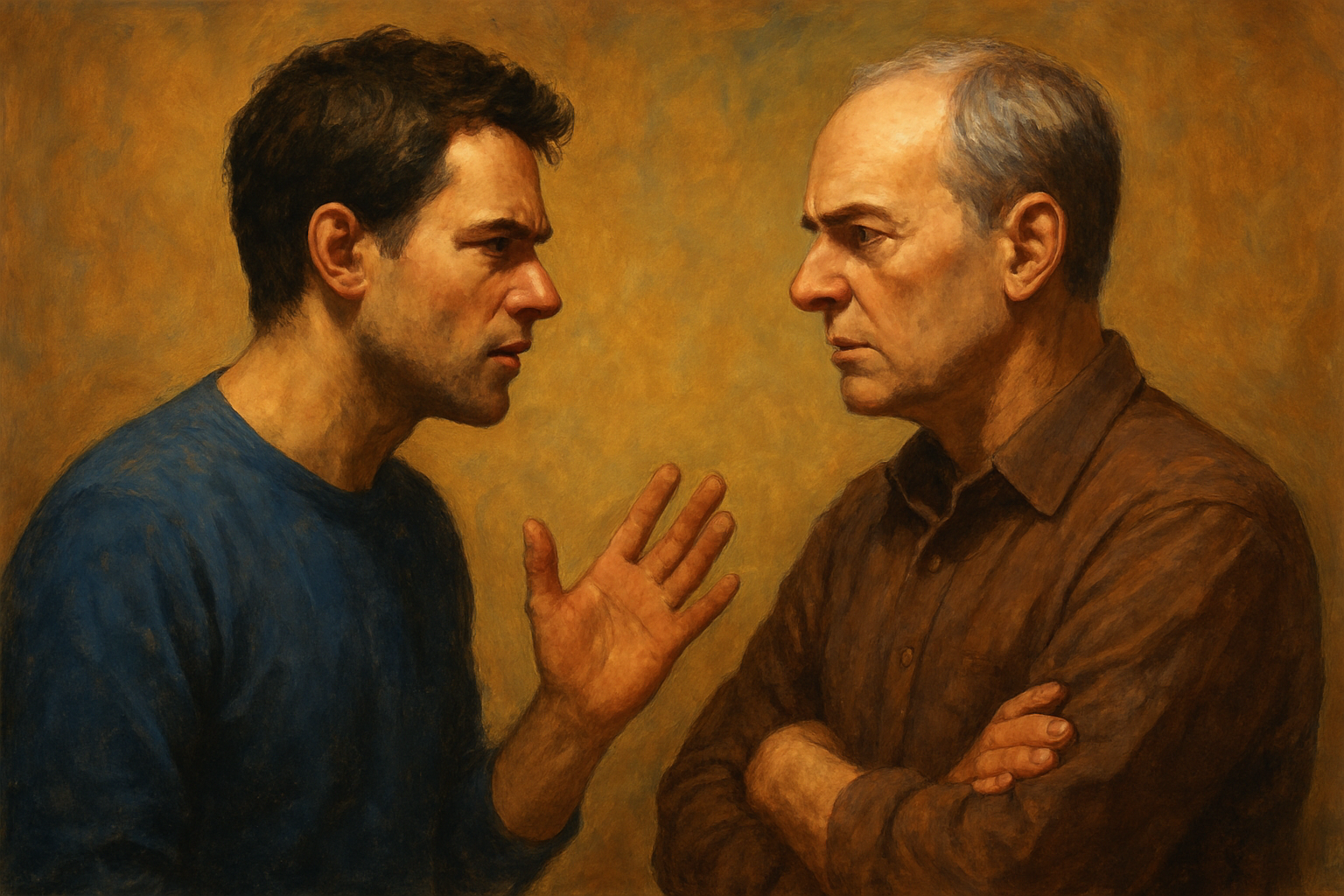
The person I often clash with is older than me, almost twice my age. Our conversations are rarely calm. I will bring up something hopeful, and he will find a reason why it cannot be done.
If I talk about change, he talks about how the world has always been the same. If I speak about progress, he speaks about failure. Every discussion becomes a contest between imagination and caution.
I used to think he was doing it on purpose. But now I see it differently. He is not trying to shut me down. He is trying to keep himself safe from disappointment. He has lived through times that probably taught him that big ideas usually end badly. So now, anything that sounds uncertain looks like a threat. I understand it, but it still hurts to see how closed that mindset can be.
It took me a while to stop fighting them in my mind. I used to go back home angry after every discussion, replaying the words, thinking about how misunderstood I felt. Over time, I began to see that people like him are not my enemies. They are mirrors of what happens when life teaches you to stop believing. They remind me what happens when the world convinces you that imagination is foolish.
When someone becomes pessimistic, they do not just reject your idea. They reject the part of themselves that once believed in possibility. Cynicism often looks like intelligence, but it is mostly built on pain. It says, “I have seen too much to hope again.” I think that is why arguments with pessimistic people feel endless. You are not really debating facts. You are speaking to a wound that refuses to heal.
I have learned to approach such moments differently. When someone says, “That will never happen,” I no longer try to prove them wrong. I just listen. Sometimes I say, “Maybe not, but I still want to try.” It keeps my peace and reminds me why I speak about ideas in the first place. My goal is not to convince everyone. It is to express what I see and to believe in what could be.
The older person I argue with still thinks I am too idealistic. Maybe I am. But I would rather hold on to that than lose the ability to imagine. Every generation needs people who believe in what does not yet exist. Without that, nothing new would ever appear.
I now understand that people who always say “it’s impossible” are often just tired. They have seen good things fail and hope turn into regret. They are protecting themselves. But in that protection, they also lose something essential, the sense that life can still surprise them.
I sometimes wonder if the world has too many tired dreamers pretending to be realists. They wear the word “realistic” like armor. But under that armor is a quiet fear of being disappointed again. I do not blame them. Life can be harsh, and sometimes hope feels like a luxury. But I still believe that the small group of people who keep believing, even when it looks foolish, are the ones who eventually move the world forward.
We still have these conversations. Sometimes they end in silence, sometimes in frustration. But I keep them going because I know that deep down, even the most cynical people respect courage. They may never admit it, but they notice when someone continues to believe.
When I speak about change, I am not asking the world to transform overnight. I am asking people to stay open, to imagine, to question what they have accepted as final. Every time I say something that sounds impossible, I remind myself that everything once impossible was only waiting for someone stubborn enough to keep trying.
That is what I mean when I talk about the slavery of the mind. It is not about rejecting jobs or systems. It is about freeing ourselves from the invisible walls that tell us to stop thinking beyond what already exists. I do not want to live inside that kind of quiet defeat. I would rather believe, even when belief looks unreasonable.
Because in the end, it is not about being right. It is about keeping the door open for possibility.
Resources
Read More
Read more articles on the topics that interest you
10 Skills That Can Land You a Job Within 12 Months
Which skills employers actually hire for, how to learn them fast, and how to prove you can perform

Highest-paid jobs in South Africa 2026
Salary ranges, real examples and where demand is strongest across sectors

Highest-Paying Jobs in South Africa 2026
Real salary ranges, sector winners, and the qualifications that earn top pay

Is a Computer Science Degree Worth It?
A clear-eyed look at pay, alternatives, and when a diploma still opens doors
The Truth About Job Hopping
When frequent moves accelerate pay and skill growth — and when they leave you behind

What Recruiters Look for in a CV
How to shape a CV that a recruiter reads in seconds and remembers for interviews