
How AI Is Changing the Way People Learn Technical Skills
Why instant feedback, new assessments, and practical verification matter for today's learners

When ChatGPT reached 100 million monthly users within two months of its public launch, it did more than break a growth record; it signaled a sudden, widespread appetite for on-demand technical help and explanation. That appetite is reshaping how people pick up coding, data analysis, cloud engineering and other technical skills—faster feedback, richer examples, and lower barriers to experimentation.
The rest of this article explains what has actually changed, where AI accelerates learning, where it introduces new weaknesses, and what educators, employers, and learners must do to keep skill acquisition meaningful and reliable by the time a course ends or a hire starts.
The shortening of the feedback loop
Traditional learning cycles—lecture, homework, office hours, corrected assignment—could take days or weeks. AI tools collapse that cycle into seconds. A student stuck on a syntax error can paste code into an assistant and receive a correction, an explanation of the bug, and a suggested test case in under a minute.
That speed matters because learning technical skills depends on precise, timely feedback. Research on deliberate practice shows that delayed or vague feedback produces slower gains. Instant feedback lets learners iterate: try, fail, see why, and try again. For many, that compression converts passive study into active experimentation.
Practical examples abound. Pair-programming assistants such as GitHub Copilot suggest lines of code as you type. Interactive notebooks powered by language models can propose data-cleaning steps or visualization code on demand. Even where the AI is not perfect, the immediate pattern of code—error-message, fix, rerun—creates a sequence of micro-lessons that did not exist a few years ago.
More examples, fewer gatekeepers
Before large language models, learners relied on forum answers, textbooks, or an instructor’s limited office hours. Now an assistant can generate multiple working implementations of the same function, explain trade-offs, and translate a concept into several languages or frameworks. That breadth reduces the need to find a domain-specialist mentor for every small question.
At the same time, quantity is not the same as quality. Models will produce plausible-but-incorrect code and convincing but unsupported explanations. That danger makes the ability to verify outputs essential. Reading a model’s suggestion critically and running it against controlled tests are becoming basic technical skills in their own right.
"ChatGPT reached 100 million monthly users within two months of launch," demonstrating how quickly AI tools entered everyday learning workflows. The Verge
What AI does well, and where it gets stuck
AI accelerates pattern recognition and scaffolds procedural knowledge. It excels at generating boilerplate code, showing canonical examples, proposing debugging steps, and offering explanations phrased at different levels of expertise. For a learner trying to understand a new library or interface, that is often enough to move past the initial friction.
Where AI struggles is deeper conceptual understanding, long-term project design, and context-specific trade-offs. Models lack reliable access to the intent behind a project, the constraints of a legacy system, or organizational norms. They also hallucinate facts, invent nonexistent functions, and sometimes output insecure code unless prompted to consider safety.
That last point matters for employers. When hiring managers screen candidates who have used AI, they now need ways to distinguish assisted work from independent mastery. Take-home projects, previously a neutral test of skill, can be completed with high competence by someone who leans heavily on an assistant. Employers are starting to design assessments that reveal process as well as product—version histories, intermediate commits, deliberate test cases, and oral walk-throughs that probe reasoning.
Institutions are rewriting the syllabus
Colleges and bootcamps are responding in three consistent ways. First, they accept that students will use AI and teach how to use it responsibly: prompt craft, verification, and citation. Second, they emphasize projects that require original design judgment rather than rote output. Third, assessment methods shift toward observations of process—design reviews, live coding interviews, and pair-programming sessions with human examiners.
These adjustments are not just defensive. They can raise the floor of what instructors expect students to try. Instructors can assign more ambitious projects knowing that students have better tools to prototype ideas, explore libraries, and test hypotheses. The trade-off is that grading becomes more labor-intensive. Assessors must determine if a solution reflects genuine understanding or a polished surface produced by an assistant.
Who benefits—and who falls behind
AI lowers the cost of trial-and-error practice for motivated learners with reliable internet access. A self-taught programmer in a city with fast broadband can iterate on projects far faster than a learner without those resources. That makes access to high-quality devices, connectivity, and curated practice environments the new equity battleground for technical skill-building.
Organizations that provide infrastructure—company labs, public makerspaces, or subsidized cloud credits—will shape who gets advanced skills fastest. Policymakers and educational leaders should pay attention: if the tools that speed learning are distributed unevenly, AI could widen existing gaps rather than close them.
Three practical changes every learner should adopt
First, treat AI output as hypothesis, not authority. Run suggested code in small, controlled experiments and write tests that validate the model’s assumptions. Second, document your process. Keep commit histories, short explanatory notes, and simple tests that show how you reached a solution. Third, cultivate adjacent skills: reading documentation fast, designing unit tests, and translating ambiguous product requirements into concrete acceptance criteria. These practices turn assistance into durable competence.
Employers and educators must also update what they teach. Prompt strategy and model stewardship belong alongside version control and test-driven development. Students who can ask crisp questions of an assistant and then verify its answers will outpace those who rely on outputs without interrogation.
Regulatory and credential implications
Licensing bodies and certification programs are grappling with whether to allow AI-assisted work during exams. Some professions will require supervised, proctored assessments to prove individual capability. Others may embrace open-assistant workflows but require a documented chain of evidence: an annotated notebook, a decision log, or a video of the candidate explaining choices.
Accreditation itself may change. Microcredentials focused on demonstrable project outcomes, accompanied by reproducible artifacts, will gain value. Employers may trust a certified portfolio with reproducible steps more than a diploma whose coursework could have been heavily AI-assisted.
Longer-term: what mastery looks like
Short-term gains show up as faster task completion and wider access to examples. Mastery, though, remains a different animal. It requires the ability to foresee failure modes, to design systems that degrade gracefully, and to reason about edge cases that an assistant may never mention.
Humans still provide the bridge between tools and context. The skill set that will define technical mastery in the coming decade blends domain knowledge, critical evaluation of model outputs, and meta-skills: how to construct meaningful experiments, how to interpret results under uncertainty, and how to communicate trade-offs to nontechnical stakeholders.
AI shortens the path to competence, but it does not replace the need for careful judgment. Learners who treat models as collaborators will advance faster, but those who accept outputs uncritically will acquire brittle skills.
A pragmatic road map for organizations
Companies that train staff should not ban assistants; they should adapt assessments and invest in verification tooling. That means encouraging reproducible artifacts, dedicating time for code reviews that probe reasoning, and building internal guidelines for acceptable AI use—what data can be shared with models, how to annotate AI-supplied code, and how to log model-assisted decisions.
Public training programs can pair cloud credits with curated curricula that teach verification practices. Libraries and workforce centers can create supervised labs where learners practice with assistants under the guidance of an experienced instructor.
For policymakers, the priority is equity: subsidize access, support teacher training in AI literacy, and fund research into how AI-assisted learning affects long-term outcomes across different populations.
The balance between human judgment and machine assistance will be the defining pedagogical question of this era. AI can reduce friction and democratize entry points into technical fields, but it also creates new tasks: validating, documenting, and explaining work. Those tasks are not cosmetic. They are the scaffolding that turns assisted work into trustworthy skill.
As the tools settle into classrooms and companies, the most adaptive learners will be those who combine rapid experimentation with disciplined verification and clear communication. The future of technical training is not that machines will do the thinking for us. It is that they will change which kinds of thinking matter most.
Read More
Read more articles on the topics that interest you
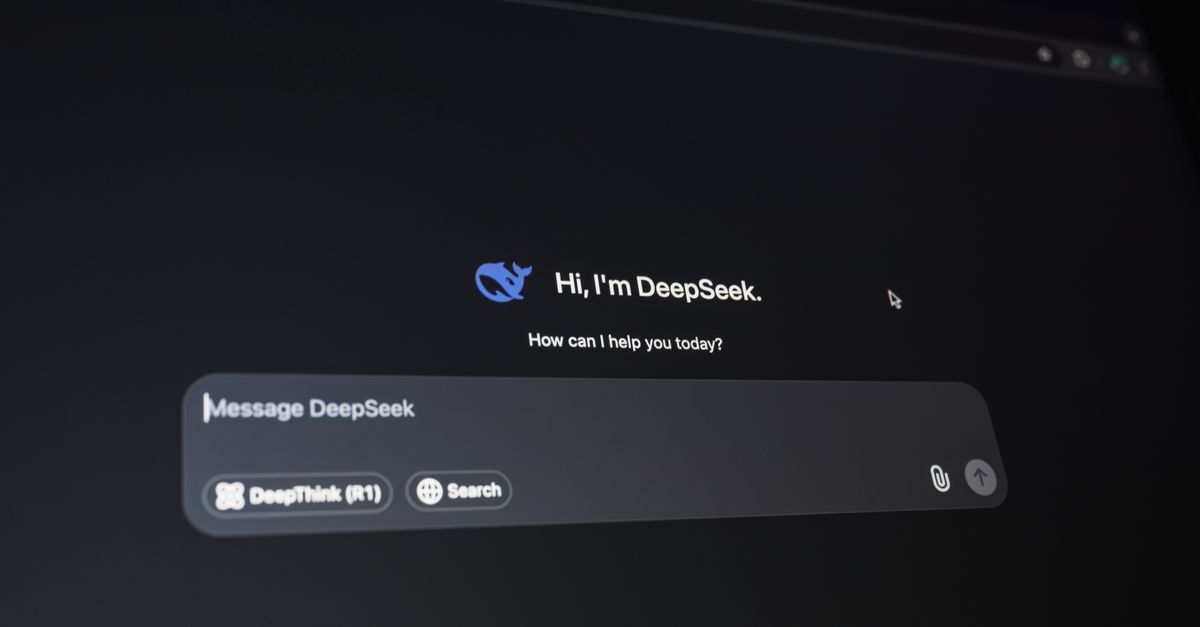
What Is Retrieval-Augmented Generation (RAG), and Why Does It Matter?
How RAG connects AI models to external information

How to Enter a High-Demand Career Without a University Degree
Concrete routes, from bootcamps to apprenticeships that lead to paid roles in tech and trades

10 Skills That Can Land You a Job Within 12 Months
Which skills employers actually hire for, how to learn them fast, and how to prove you can perform

South Africa's Hottest Careers for 2026
Where demand, pay, and training align for the next hiring cycle across key sectors
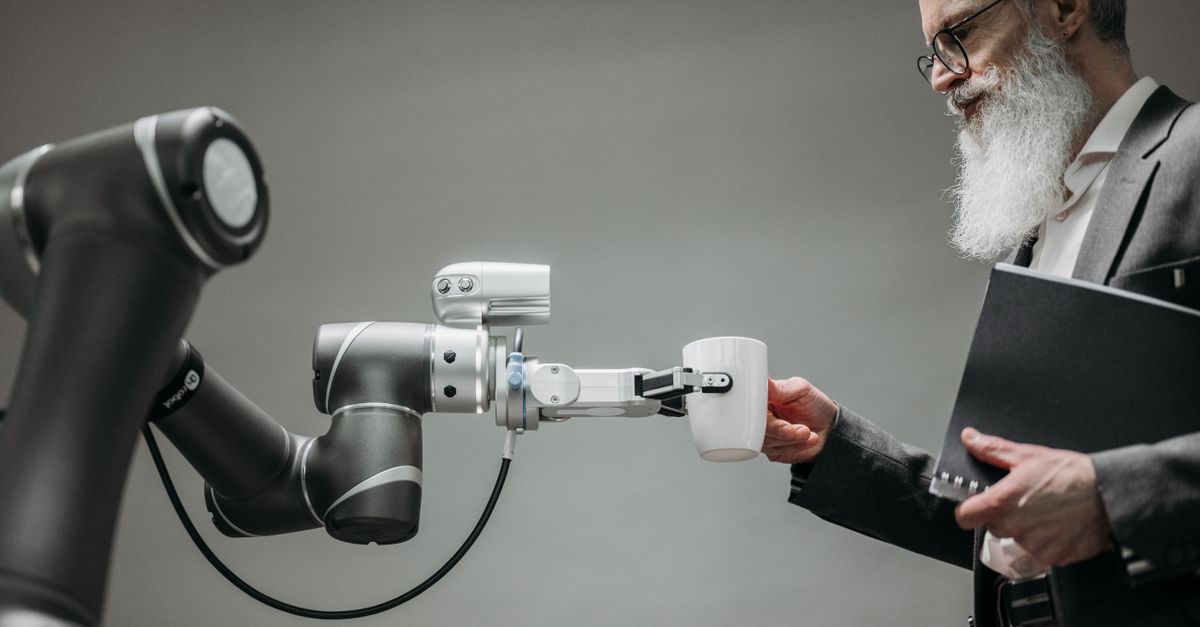
15 Jobs That AI Won't Replace Anytime Soon
Specific occupations where judgment, touch and trust keep humans essential for years

Highest-Paying Jobs in South Africa 2026
Real salary ranges, sector winners, and the qualifications that earn top pay