


Turn ideas into working apps with plain English - no code, Stripe ready.
Get started5 Python Techniques Everyone Should Know
Unlocking the power of Python with practical, time-saving techniques
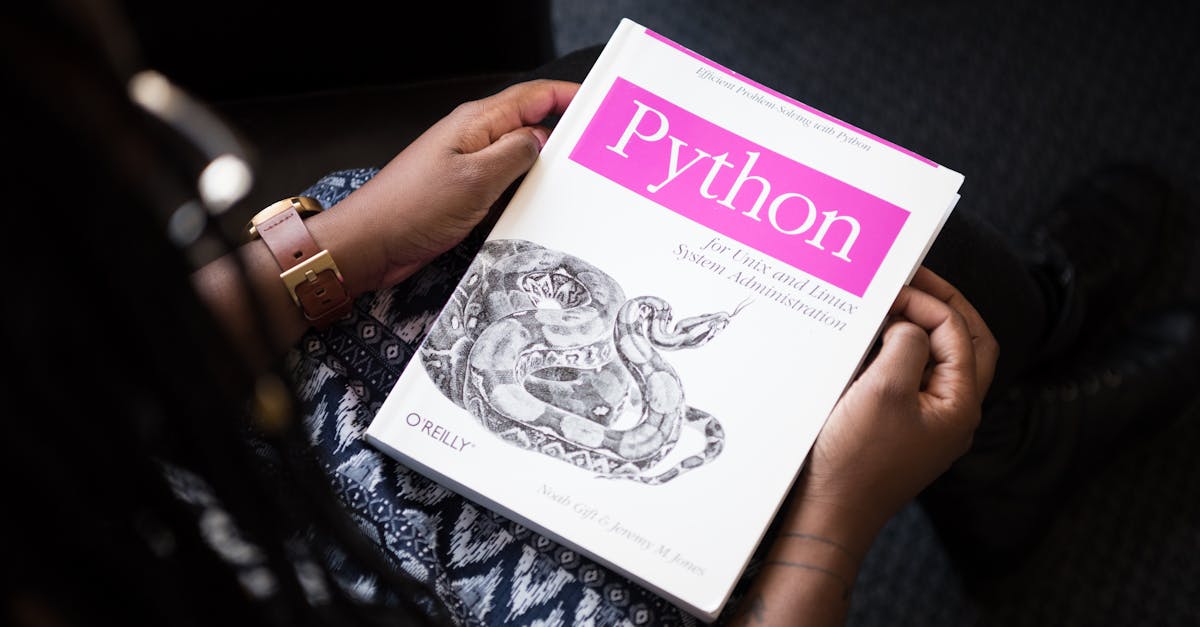
Python is widely celebrated for its readability, versatility, and powerful libraries, making it the language of choice for beginners and professionals alike.
However, mastering Python isn’t just about knowing syntax; it’s about using techniques that make your code cleaner, faster, and more efficient. Here are five Python techniques everyone should know.
1. List Comprehensions for Cleaner Code
List comprehensions allow you to create lists in a single, readable line. Instead of writing a loop to build a list, you can condense it.
Example:
squares = [x**2 for x in range(10)] This produces [0, 1, 4, 9, 16, 25, 36, 49, 64, 81]. List comprehensions can also include conditions:
even_squares = [x**2 for x in range(10) if x % 2 == 0] This technique not only makes your code more concise but also easier to understand at a glance.
2. Using enumerate() Instead of Manual Counters
When looping through lists, you often need both the index and the value. Python’s enumerate() saves time and avoids manual counters.
Example:
fruits = ['apple', 'banana', 'cherry']
for index, fruit in enumerate(fruits, start=1):
    print(f"{index}: {fruit}")
This prints:
1: apple
2: banana
3: cherry
It’s cleaner, less error-prone, and widely used in Pythonic code.
3. Unpacking with * and **
Python allows flexible unpacking of lists, tuples, and dictionaries. This is extremely useful when handling multiple values.
Example with lists:
numbers = [1, 2, 3, 4, 5]
first, *middle, last = numbers
Here, first is 1, middle is [2, 3, 4], and last is 5.
Example with dictionaries:
data = {'a': 1, 'b': 2}
new_data = {**data, 'c': 3}
This creates {'a': 1, 'b': 2, 'c': 3}. Unpacking reduces boilerplate code and makes your logic more readable.
4. Using zip() to Pair Data Efficiently
The zip() function allows you to iterate over multiple sequences simultaneously, pairing elements automatically.
Example:
names = ['Alice', 'Bob', 'Charlie']
scores = [85, 92, 78]

for name, score in zip(names, scores):
    print(f"{name} scored {score}")
Output:
Alice scored 85
Bob scored 92
Charlie scored 78
zip() is perfect for parallel iteration, combining lists, or even transposing matrices.
5. Leveraging defaultdict for Easier Dictionary Management
Python’s collections.defaultdict simplifies cases where you want to group or count items without manually checking if keys exist.
Example:
from collections import defaultdict

word_count = defaultdict(int)
words = ['apple', 'banana', 'apple', 'cherry', 'banana']

for word in words:
    word_count[word] += 1

print(word_count)
Output:
defaultdict(<class 'int'>, {'apple': 2, 'banana': 2, 'cherry': 1})
This eliminates repetitive checks, streamlining tasks like counting, grouping, or building nested dictionaries.
Why These Techniques Matter
Mastering these techniques makes your Python code more Pythonic—cleaner, efficient, and easier to maintain. They are widely used in real-world projects, from data analysis to web development, and help you write code that scales elegantly.
These five techniques—list comprehensions, enumerate(), unpacking, zip(), and defaultdict—are small changes that can drastically improve your coding workflow. Incorporate them, and your Python skills will immediately feel sharper.
Read More
Read more articles on the topics that interest you

Solar Cost for Small Businesses in South Africa: Ranges
See what different system sizes include, where extra costs hide, and how to compare quotes

How to Buy Bitcoin in South Africa Legally in 5 Steps
Choose a provider, pay in rand, check the costs and keep tax records

How to Build a Full-Stack Web App With AI in 7 Steps
Adapt a starter project, then use AI to build, test and launch your first working version

Best AI Website Builders for Beginners in 2026: 5 Picks
Compare easy site creation, online selling, costs and the trade-offs before you choose

Jobs most likely to be replaced by Artificial Intelligence
Exploring careers at risk due to AI advancements and automation

How to start an AI business in South Africa
Essential steps for launching an AI venture in South Africa